
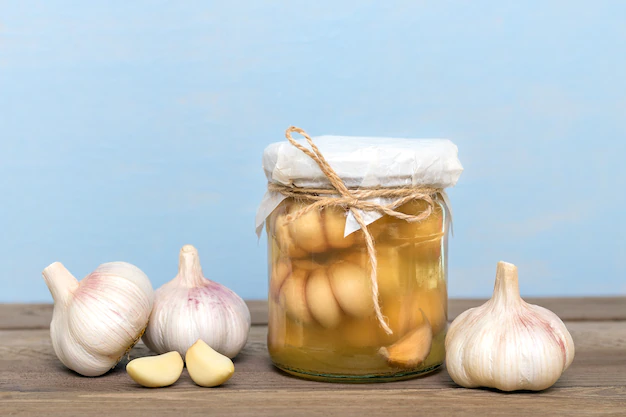
Garlic refers to plants in the genus Allium, most commonly Allium sativum. This perennial forms a papery bulb (“head”) of tightly wrapped cloves that have flavored food—and medicine—for millennia.
Enjoyed this recipe? Share the love and explore more crave-worthy dishes on our site!
A quick garlic history bite:
Garlic refers to plants in the genus Allium, most commonly Allium sativum. This perennial forms a papery bulb (“head”) of tightly wrapped cloves that have flavored food—and medicine—for millennia.
Enjoyed this recipe? Share the love and explore more crave-worthy dishes on our site!
A quick garlic history bite:
Garlic refers to plants in the genus Allium, most commonly Allium sativum. This perennial forms a papery bulb (“head”) of tightly wrapped cloves that have flavored food—and medicine—for millennia.
Enjoyed this recipe? Share the love and explore more crave-worthy dishes on our site!
Serving Ideas:
Spoon these mellow, buttery cloves onto salads, steaks, fish, or crusty bread. Garlic is naturally anti-inflammatory and loaded with antioxidants—an effortless boost for everyday meals.
A quick garlic history bite:
Garlic refers to plants in the genus Allium, most commonly Allium sativum. This perennial forms a papery bulb (“head”) of tightly wrapped cloves that have flavored food—and medicine—for millennia.
Enjoyed this recipe? Share the love and explore more crave-worthy dishes on our site!
Garlic refers to plants in the genus Allium, most commonly Allium sativum. This perennial forms a papery bulb (“head”) of tightly wrapped cloves that have flavored food—and medicine—for millennia.
Enjoyed this recipe? Share the love and explore more crave-worthy dishes on our site!
A quick garlic history bite:
Garlic refers to plants in the genus Allium, most commonly Allium sativum. This perennial forms a papery bulb (“head”) of tightly wrapped cloves that have flavored food—and medicine—for millennia.
Enjoyed this recipe? Share the love and explore more crave-worthy dishes on our site!
A quick garlic history bite:
Garlic refers to plants in the genus Allium, most commonly Allium sativum. This perennial forms a papery bulb (“head”) of tightly wrapped cloves that have flavored food—and medicine—for millennia.
Enjoyed this recipe? Share the love and explore more crave-worthy dishes on our site!
Serving Ideas:
Spoon these mellow, buttery cloves onto salads, steaks, fish, or crusty bread. Garlic is naturally anti-inflammatory and loaded with antioxidants—an effortless boost for everyday meals.
A quick garlic history bite:
Garlic refers to plants in the genus Allium, most commonly Allium sativum. This perennial forms a papery bulb (“head”) of tightly wrapped cloves that have flavored food—and medicine—for millennia.
Enjoyed this recipe? Share the love and explore more crave-worthy dishes on our site!
A quick garlic history bite:
Garlic refers to plants in the genus Allium, most commonly Allium sativum. This perennial forms a papery bulb (“head”) of tightly wrapped cloves that have flavored food—and medicine—for millennia.
Enjoyed this recipe? Share the love and explore more crave-worthy dishes on our site!
Garlic is the cornerstone seasoning for almost every savory dish—today we’re sharing a knockout preserved garlic in olive oil that belongs in every kitchen.
Ingredients for Preserved Garlic:
- 1 lb peeled garlic cloves;
- Water to blanch the garlic;
- 1 cup extra-virgin olive oil;
- Freshly ground black pepper to taste;
- ¾ cup rice vinegar;
- Fresh herbs (thyme, rosemary, or bay) to season.
How to Make Preserved Garlic:
- Place the peeled garlic in a saucepan (heat off) and cover completely with water;
- Add the rice vinegar;
- Give it a stir, then turn the heat to high;
- Bring to a boil;
- Set a colander in the sink;
- Drain the garlic thoroughly;
- Let both garlic and cooking liquid cool separately;
- Once cold, return the garlic to the cooled liquid, cover, and refrigerate 48 hours;
- Pour off the liquid, toss the cloves with herbs;
- Season with black pepper;
- Pour in the extra-virgin olive oil;
- Transfer to a clean glass jar, adding more oil so every clove is submerged. Seal and refrigerate.
Serving Ideas:
Spoon these mellow, buttery cloves onto salads, steaks, fish, or crusty bread. Garlic is naturally anti-inflammatory and loaded with antioxidants—an effortless boost for everyday meals.
A quick garlic history bite:
Garlic refers to plants in the genus Allium, most commonly Allium sativum. This perennial forms a papery bulb (“head”) of tightly wrapped cloves that have flavored food—and medicine—for millennia.
Enjoyed this recipe? Share the love and explore more crave-worthy dishes on our site!
Serving Ideas:
Spoon these mellow, buttery cloves onto salads, steaks, fish, or crusty bread. Garlic is naturally anti-inflammatory and loaded with antioxidants—an effortless boost for everyday meals.
A quick garlic history bite:
Garlic refers to plants in the genus Allium, most commonly Allium sativum. This perennial forms a papery bulb (“head”) of tightly wrapped cloves that have flavored food—and medicine—for millennia.
Enjoyed this recipe? Share the love and explore more crave-worthy dishes on our site!
Garlic is the cornerstone seasoning for almost every savory dish—today we’re sharing a knockout preserved garlic in olive oil that belongs in every kitchen.
Ingredients for Preserved Garlic:
- 1 lb peeled garlic cloves;
- Water to blanch the garlic;
- 1 cup extra-virgin olive oil;
- Freshly ground black pepper to taste;
- ¾ cup rice vinegar;
- Fresh herbs (thyme, rosemary, or bay) to season.
How to Make Preserved Garlic:
- Place the peeled garlic in a saucepan (heat off) and cover completely with water;
- Add the rice vinegar;
- Give it a stir, then turn the heat to high;
- Bring to a boil;
- Set a colander in the sink;
- Drain the garlic thoroughly;
- Let both garlic and cooking liquid cool separately;
- Once cold, return the garlic to the cooled liquid, cover, and refrigerate 48 hours;
- Pour off the liquid, toss the cloves with herbs;
- Season with black pepper;
- Pour in the extra-virgin olive oil;
- Transfer to a clean glass jar, adding more oil so every clove is submerged. Seal and refrigerate.
Serving Ideas:
Spoon these mellow, buttery cloves onto salads, steaks, fish, or crusty bread. Garlic is naturally anti-inflammatory and loaded with antioxidants—an effortless boost for everyday meals.
A quick garlic history bite:
Garlic refers to plants in the genus Allium, most commonly Allium sativum. This perennial forms a papery bulb (“head”) of tightly wrapped cloves that have flavored food—and medicine—for millennia.
Enjoyed this recipe? Share the love and explore more crave-worthy dishes on our site!
A quick garlic history bite:
Garlic refers to plants in the genus Allium, most commonly Allium sativum. This perennial forms a papery bulb (“head”) of tightly wrapped cloves that have flavored food—and medicine—for millennia.
Enjoyed this recipe? Share the love and explore more crave-worthy dishes on our site!
Serving Ideas:
Spoon these mellow, buttery cloves onto salads, steaks, fish, or crusty bread. Garlic is naturally anti-inflammatory and loaded with antioxidants—an effortless boost for everyday meals.
A quick garlic history bite:
Garlic refers to plants in the genus Allium, most commonly Allium sativum. This perennial forms a papery bulb (“head”) of tightly wrapped cloves that have flavored food—and medicine—for millennia.
Enjoyed this recipe? Share the love and explore more crave-worthy dishes on our site!
Garlic is the cornerstone seasoning for almost every savory dish—today we’re sharing a knockout preserved garlic in olive oil that belongs in every kitchen.
Ingredients for Preserved Garlic:
- 1 lb peeled garlic cloves;
- Water to blanch the garlic;
- 1 cup extra-virgin olive oil;
- Freshly ground black pepper to taste;
- ¾ cup rice vinegar;
- Fresh herbs (thyme, rosemary, or bay) to season.
How to Make Preserved Garlic:
- Place the peeled garlic in a saucepan (heat off) and cover completely with water;
- Add the rice vinegar;
- Give it a stir, then turn the heat to high;
- Bring to a boil;
- Set a colander in the sink;
- Drain the garlic thoroughly;
- Let both garlic and cooking liquid cool separately;
- Once cold, return the garlic to the cooled liquid, cover, and refrigerate 48 hours;
- Pour off the liquid, toss the cloves with herbs;
- Season with black pepper;
- Pour in the extra-virgin olive oil;
- Transfer to a clean glass jar, adding more oil so every clove is submerged. Seal and refrigerate.
Serving Ideas:
Spoon these mellow, buttery cloves onto salads, steaks, fish, or crusty bread. Garlic is naturally anti-inflammatory and loaded with antioxidants—an effortless boost for everyday meals.
A quick garlic history bite:
Garlic refers to plants in the genus Allium, most commonly Allium sativum. This perennial forms a papery bulb (“head”) of tightly wrapped cloves that have flavored food—and medicine—for millennia.
Enjoyed this recipe? Share the love and explore more crave-worthy dishes on our site!
A quick garlic history bite:
Garlic refers to plants in the genus Allium, most commonly Allium sativum. This perennial forms a papery bulb (“head”) of tightly wrapped cloves that have flavored food—and medicine—for millennia.
Enjoyed this recipe? Share the love and explore more crave-worthy dishes on our site!
Garlic is the cornerstone seasoning for almost every savory dish—today we’re sharing a knockout preserved garlic in olive oil that belongs in every kitchen.
Ingredients for Preserved Garlic:
- 1 lb peeled garlic cloves;
- Water to blanch the garlic;
- 1 cup extra-virgin olive oil;
- Freshly ground black pepper to taste;
- ¾ cup rice vinegar;
- Fresh herbs (thyme, rosemary, or bay) to season.
How to Make Preserved Garlic:
- Place the peeled garlic in a saucepan (heat off) and cover completely with water;
- Add the rice vinegar;
- Give it a stir, then turn the heat to high;
- Bring to a boil;
- Set a colander in the sink;
- Drain the garlic thoroughly;
- Let both garlic and cooking liquid cool separately;
- Once cold, return the garlic to the cooled liquid, cover, and refrigerate 48 hours;
- Pour off the liquid, toss the cloves with herbs;
- Season with black pepper;
- Pour in the extra-virgin olive oil;
- Transfer to a clean glass jar, adding more oil so every clove is submerged. Seal and refrigerate.
Serving Ideas:
Spoon these mellow, buttery cloves onto salads, steaks, fish, or crusty bread. Garlic is naturally anti-inflammatory and loaded with antioxidants—an effortless boost for everyday meals.
A quick garlic history bite:
Garlic refers to plants in the genus Allium, most commonly Allium sativum. This perennial forms a papery bulb (“head”) of tightly wrapped cloves that have flavored food—and medicine—for millennia.
Enjoyed this recipe? Share the love and explore more crave-worthy dishes on our site!
Serving Ideas:
Spoon these mellow, buttery cloves onto salads, steaks, fish, or crusty bread. Garlic is naturally anti-inflammatory and loaded with antioxidants—an effortless boost for everyday meals.
A quick garlic history bite:
Garlic refers to plants in the genus Allium, most commonly Allium sativum. This perennial forms a papery bulb (“head”) of tightly wrapped cloves that have flavored food—and medicine—for millennia.
Enjoyed this recipe? Share the love and explore more crave-worthy dishes on our site!
Garlic is the cornerstone seasoning for almost every savory dish—today we’re sharing a knockout preserved garlic in olive oil that belongs in every kitchen.
Ingredients for Preserved Garlic:
- 1 lb peeled garlic cloves;
- Water to blanch the garlic;
- 1 cup extra-virgin olive oil;
- Freshly ground black pepper to taste;
- ¾ cup rice vinegar;
- Fresh herbs (thyme, rosemary, or bay) to season.
How to Make Preserved Garlic:
- Place the peeled garlic in a saucepan (heat off) and cover completely with water;
- Add the rice vinegar;
- Give it a stir, then turn the heat to high;
- Bring to a boil;
- Set a colander in the sink;
- Drain the garlic thoroughly;
- Let both garlic and cooking liquid cool separately;
- Once cold, return the garlic to the cooled liquid, cover, and refrigerate 48 hours;
- Pour off the liquid, toss the cloves with herbs;
- Season with black pepper;
- Pour in the extra-virgin olive oil;
- Transfer to a clean glass jar, adding more oil so every clove is submerged. Seal and refrigerate.
Serving Ideas:
Spoon these mellow, buttery cloves onto salads, steaks, fish, or crusty bread. Garlic is naturally anti-inflammatory and loaded with antioxidants—an effortless boost for everyday meals.
A quick garlic history bite:
Garlic refers to plants in the genus Allium, most commonly Allium sativum. This perennial forms a papery bulb (“head”) of tightly wrapped cloves that have flavored food—and medicine—for millennia.
Enjoyed this recipe? Share the love and explore more crave-worthy dishes on our site!
A quick garlic history bite:
Garlic refers to plants in the genus Allium, most commonly Allium sativum. This perennial forms a papery bulb (“head”) of tightly wrapped cloves that have flavored food—and medicine—for millennia.
Enjoyed this recipe? Share the love and explore more crave-worthy dishes on our site!
Serving Ideas:
Spoon these mellow, buttery cloves onto salads, steaks, fish, or crusty bread. Garlic is naturally anti-inflammatory and loaded with antioxidants—an effortless boost for everyday meals.
A quick garlic history bite:
Garlic refers to plants in the genus Allium, most commonly Allium sativum. This perennial forms a papery bulb (“head”) of tightly wrapped cloves that have flavored food—and medicine—for millennia.
Enjoyed this recipe? Share the love and explore more crave-worthy dishes on our site!
Garlic is the cornerstone seasoning for almost every savory dish—today we’re sharing a knockout preserved garlic in olive oil that belongs in every kitchen.
Ingredients for Preserved Garlic:
- 1 lb peeled garlic cloves;
- Water to blanch the garlic;
- 1 cup extra-virgin olive oil;
- Freshly ground black pepper to taste;
- ¾ cup rice vinegar;
- Fresh herbs (thyme, rosemary, or bay) to season.
How to Make Preserved Garlic:
- Place the peeled garlic in a saucepan (heat off) and cover completely with water;
- Add the rice vinegar;
- Give it a stir, then turn the heat to high;
- Bring to a boil;
- Set a colander in the sink;
- Drain the garlic thoroughly;
- Let both garlic and cooking liquid cool separately;
- Once cold, return the garlic to the cooled liquid, cover, and refrigerate 48 hours;
- Pour off the liquid, toss the cloves with herbs;
- Season with black pepper;
- Pour in the extra-virgin olive oil;
- Transfer to a clean glass jar, adding more oil so every clove is submerged. Seal and refrigerate.
Serving Ideas:
Spoon these mellow, buttery cloves onto salads, steaks, fish, or crusty bread. Garlic is naturally anti-inflammatory and loaded with antioxidants—an effortless boost for everyday meals.
A quick garlic history bite:
Garlic refers to plants in the genus Allium, most commonly Allium sativum. This perennial forms a papery bulb (“head”) of tightly wrapped cloves that have flavored food—and medicine—for millennia.
Enjoyed this recipe? Share the love and explore more crave-worthy dishes on our site!